In this articleTable of Contents
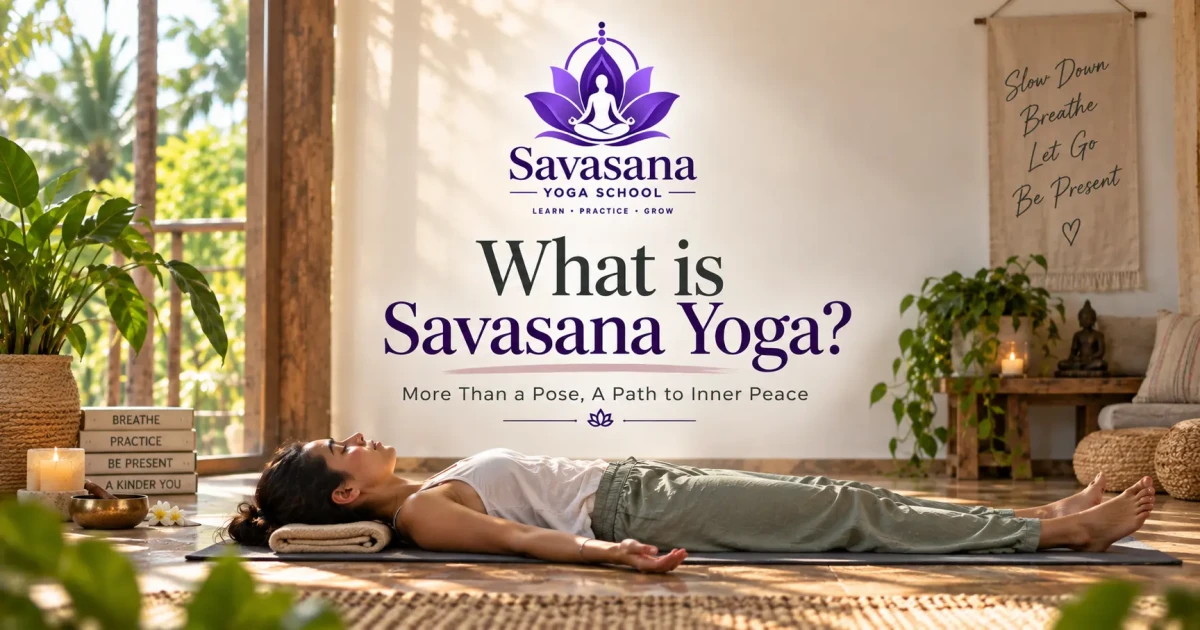
Savasana yoga is one of the most meaningful-looking postures in yoga. Also called Corpse Pose, it is usually done by lying on the back at the end of a yoga session. Unlike asanas that need strength, flexibility or balance Savasana yoga focuses on stillness, relaxation and awareness.
Although the posture appears easy, staying completely still while keeping awareness of the body and breath can be surprisingly challenging. Savasana yoga gives you time to release effort observe breathing and allow the mind to settle after an active practice.
The name comes from the Sanskrit words "śava," meaning "corpse," and "āsana," meaning "posture" or "seat." Historical yoga literature says lying supine like a corpse is a practice that reduces tiredness and promotes calmness of the mind.
In yoga, Savasana is commonly used for relaxation at the end of an asana session and may also be used alongside practices such as yoga nidra and restorative yoga.
Why is Savasana Important in Yoga?
A yoga practice is about more than doing physical poses. Both traditional and modern styles often include asana, pranayama, meditation and relaxation. Savasana provides the body a chance to settle after movement. It allows practitioners to feel the difference between effort and true rest.
In a day we rush from one task to another without stopping. A few minutes of stillness can create space to slow down. It helps us reconnect with our body and mind.
The pose also teaches a skill in yoga: relaxing without losing awareness. The goal is not to fall asleep. It is to stay comfortable and quietly aware. Such awareness builds mindfulness. Deepens the yoga experience.
How to Do the Savasana Yoga Pose?
Learning the Savasana pose is simple. Comfort is essential.
1. Prepare a Comfortable Surface
Lying on a good surface is important. You can pad it out with a folded yoga mat, blanket or carpet.
2. Lie Down on Your Back
Extend your legs and allow your feet to relax outward. Don’t try to straighten your legs.
3. Position Your Arms
Place your arms beside your body, leaving a space between your arms and your torso. Keep your hands relaxed and allow the fingers to soften.
4. Relax Your Face
Close your eyes softly. Release tension around the forehead, jaw, tongue, cheeks and eyes.
5. Observe Your Breathing
Allow your breath to become smooth and comfortable. There is no need to force breathing unless a qualified instructor has specifically guided you.
6. Relax the Whole Body
Bring your attention slowly through your body. Notice your feet, legs, hips, abdomen, chest, shoulders, arms, hands, neck and face. Wherever you notice tension, softly allow it to release.
7. Remain Quietly Aware
Let thoughts come and go without following them. You do not need to make your mind completely blank.
8. Stay for Several Minutes
You can begin with a few minutes. Slowly increase the duration. Traditional and modern practice commonly uses Savasana for around five to ten minutes, although you may also use it for longer periods.
To finish, gradually deepen your breathing move your fingers and toes, stretch comfortably, bend your knees, roll onto one side, and gradually return to a position.
Savasana Pose Yoga Alignment and Position
Good alignment in the Savasana yoga pose does not mean forcing your body into a shape. The priority should be comfort and ease. Your head should be supported comfortably. Your shoulders should feel relaxed. Your spine should be able to settle.
If lying flat makes your lower back uncomfortable, bend your knees. Keep your feet supported on the floor. This is an accepted modification that can make the posture easier and more comfortable. You can also place a folded blanket. Bolster beneath your knees to reduce tension.
Choosing the Right Mat and Props for Savasana
A Savasana yoga mat does not have to be special or expensive. The purpose of a mat is simply to provide a comfortable surface.
Depending on your needs, you may use:
- A folded blanket under the knees
- A cushion under the head
- A bolster, for additional support
- An eye pillow
- A blanket to stay warm
The right props are the ones that help you remain comfortably still without creating strain.
Read Also: 100 Hour Yoga Teacher Training in Rishikesh
Benefits of Savasana Yoga Pose
This relaxing posture is mainly associated with relaxation, body awareness and the transition from active movement to stillness. It gives practitioners an opportunity to slow down, release tension, and become more aware of their breathing and physical sensations.
1. Encourages Relaxation
After a yoga practice, Savasana gives the body time to reduce muscular effort and settle. The body begins to cool down. Muscles soften. Heart rate slows. This pause allows the nervous system to shift into a state.
2. Supports Mindful Awareness
Because you are not moving, you can pay attention to breathing, body sensations and your mental state. You might notice the rise and fall of your chest. You may feel warmth or tingling in areas. Thoughts drift in and out without judgment.
3. May Support Stress Management
Studies on yoga and relaxation response have shown that they may help with stress management and psychological health. Savasana is beneficial for calming the mind and reducing the levels of stress in the body. It helps to relax the mind and clear it of everyday worries.
4. Helps Complete the Yoga Session
Savasana can be a closing phase after asana practice, allowing you to ease gently back into normal activity. It celebrates the journey of yoga. It’s closure. It gives the body. Mind a moment to integrate what has been done.
5. Develops Body Awareness
As movement stops, it may become easier to notice areas of tension and relaxation throughout the body. A tight shoulder might stand out. A clenched jaw could be revealed. With time you begin to recognize patterns—where stress lives and where ease resides.
6. Creates Space for Reflection
The quiet environment can help practitioners observe thoughts and sensations without reacting to them. It offers a chance to step back from worries. To simply be. It allows you to breathe through moments that once felt overwhelming.
It is important to remember that research generally examines yoga as a practice rather than Savasana pose practice alone. Therefore, it would be inaccurate to present this posture as a treatment for insomnia, hypertension, anxiety disorders or other medical conditions.
Savasana for Beginners
Savasana is easy for beginners because it does not need advanced strength or flexibility. Still beginners might find the part hard. When the body stops moving, thoughts about work, family, responsibilities or things that are not finished might stand out more.
For beginners, start Savasana with a few minutes and focus on the following:
- Feel the support of the floor.
- Notice your breathing.
- Relax one part of the body at a time.
- Let thoughts come and go.
- Do not worry about whether you're doing it right.
The goal is not to make the mind completely empty. It is just to practice being relaxed and aware.
Common Mistakes in Savasana
Even a resting posture can feel uncomfortable if you put much effort into it. One common mistake is trying to control every breath. Unless a teacher has told you to breathe a way, let your breathing happen naturally.
Another mistake is keeping tightness in the shoulders in the hands in the jaw, or on the forehead. Check those areas often. Let them go soft. Some people also feel chilly when lying still. A blanket can help make the practice more comfortable.
Finally, remember that Savasana is not a time to "do nothing." The real benefit comes from being aware and letting go.
Who Should Modify Savasana?
Healthy people can practice a supported relaxation posture comfortably, but each person's needs are different. If lying flat causes discomfort, bend your knees. Support them with a bolster or a folded blanket.
People who have injuries, ongoing pain, pregnancy-related needs or other health conditions might need changes.
NCCIH says that yoga is usually safe when done correctly but also says that medical problems and personal situations can change what is right for each person.
Stop the practice if you feel a lot of pain, dizziness, trouble breathing or strange discomfort and get help from a professional when you need it.
How Long Should You Stay in Savasana?
There is no time that applies to every Savasana session. A Savasana lasting five to ten minutes can fit nicely at the end of a yoga class. Longer Savasana sessions are useful when you want rest or a restorative practice.
Beginners may start with a Savasana and gradually increase the time as they become more comfortable staying still. The depth of your relaxation is more important than counting minutes in Savasana.
Is Savasana the Same as Meditation?
Savasana and meditation can overlap; savasana and meditation are not exactly the same. Savasana is a yoga posture that helps the body relax and the mind become aware.
Meditation is a practice that can use the breath a mantra bodily feelings or any other focus. Savasana can provide a space for meditation, but you do not have to make every Savasana a formal meditation session. Likewise, you can stay awake during Savasana. Let thoughts flow without trying to control them.
How Savasana Fits Into a Complete Yoga Practice?
A balanced yoga session might have up movements, asanas, pranayama, meditation and relaxation.
Savasana offers a moment after active practice. In some traditions the pose might also be used before a session or between postures. For students who want to learn more about yoga, you can also go to the Savasana Yoga website to look at the yoga learning resources and programs available.
Why Can Savasana Feel Difficult?
Many people think that a challenging yoga pose has to be tough on the body. Savasana proves that this is not always the case. Staying still can help you pay attention to your thoughts your feelings, your body sensations and your restlessness.
Some people struggle to stop thinking about their duties. Others feel uneasy because they are not used to being quiet without anything to do. With practice, being still every day can feel more natural. Instead of trying to push away every thought, you can just notice it and bring your attention back to your breath or your body.
Final Thoughts
Savasana yoga is a posture that plays a big part in many yoga sessions. When you lie down on your back and let go of any tension, you make room for rest, awareness and a slow move away from your physical workout.
This pose does not need a lot of flexibility or strength or tricky moves. It asks you to slow down and get used to simply being. Whether you are just starting yoga or have been doing it for a while, Savasana can help your routine. Begin with a position that feels right, use supports if you need them, and let the practice grow over time.
Answers to Your Queries
Q. What's Savasana yoga?
Q. What is the meaning of Savasana?
Q. How do I perform Savasana?
Q. What are the benefits of Savasana?
Q. Can beginners practice Savasana?
Q. Do I need a Savasana yoga mat?
Q. Can I sleep during Savasana?
Q. How long should I stay in Savasana?
Comments (0)
Share a respectful question or reflection. Every comment is reviewed before it appears.
Be the first to start a thoughtful conversation.